
Kitchens That Look Remodeled Without the Tearout
Cabinet Finishing and Enameling in Plymouth and surrounding areas for outdated wood tones, chipped paint, and worn finishes that date otherwise functional cabinetry
Best Finish Painting offers cabinet finishing and enameling in Plymouth, Green Field, Maple Lake, and the surrounding areas for homeowners who want updated kitchens and bathrooms without the expense or disruption of full cabinet replacement. You may be looking at solid wood boxes with good joinery but finishes that show years of wear, discoloration around handles, or color schemes that no longer suit your space. Refinishing those cabinets restores both appearance and durability while preserving the existing layout, hardware mounting points, and structural components that still function correctly.
Cabinet finishing involves removing doors and drawer fronts, cleaning all surfaces to remove grease and residue, sanding to degloss existing finishes and create adhesion, applying primer formulated for slick surfaces, and building up thin coats of enamel or catalyzed finish that cure to a hard, washable surface. Enameling specifically refers to the application of pigmented topcoats that dry smooth and level, producing a factory-like appearance free of brush marks or texture. This process works on wood, laminate, and previously painted surfaces, though preparation steps vary depending on substrate and the condition of what is already there.
If you are weighing cabinet replacement against refinishing, request a cabinet consultation from Best Finish Painting to review your existing boxes and discuss finish options suited to your space.
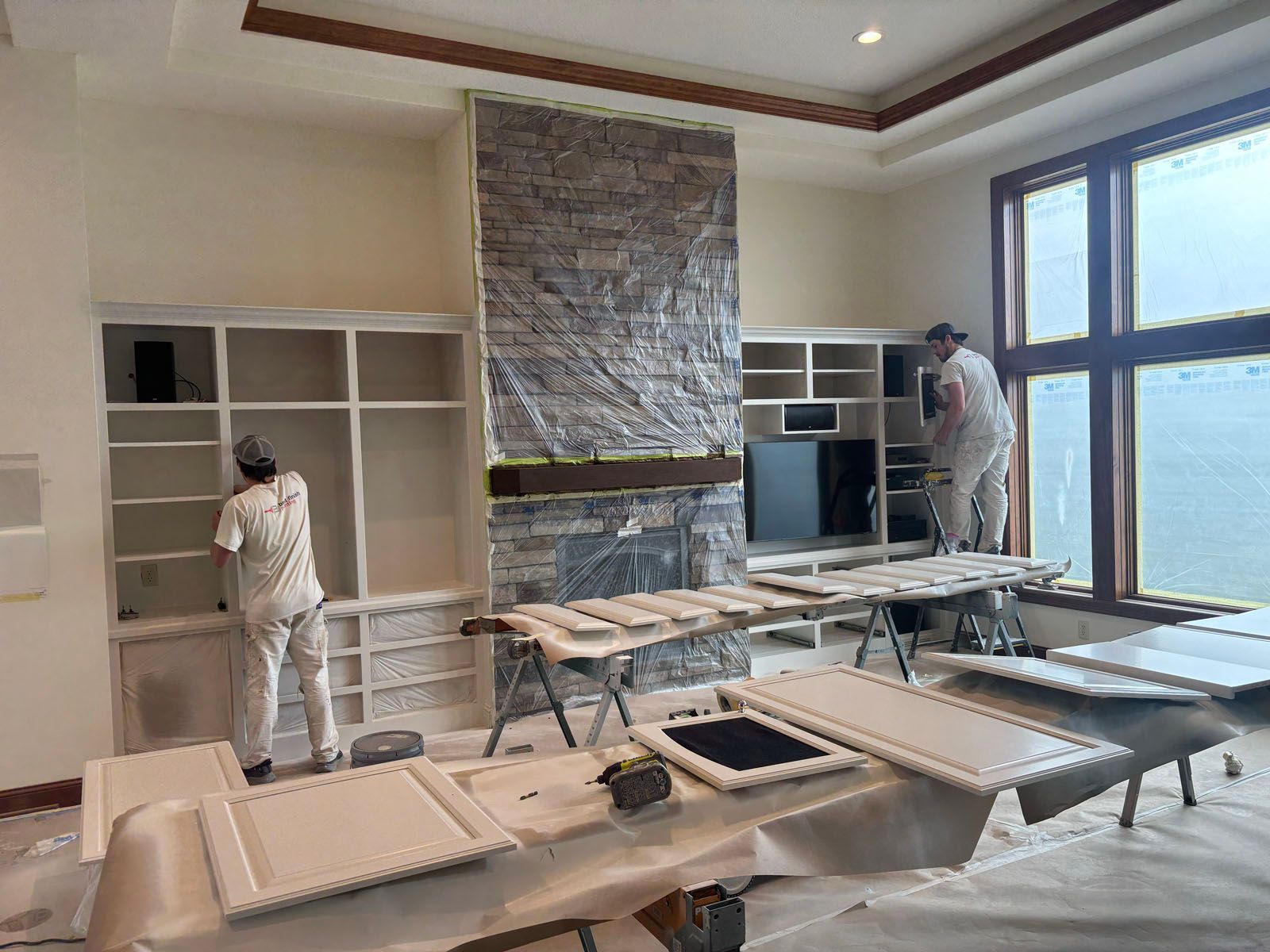
How Prep and Product Choice Affect Longevity
Your cabinets endure more contact, moisture, and cleaning than any other painted surface in your home, which is why surface prep and coating selection matter more here than on walls or trim. Best Finish Painting uses deglosser or fine-grit sanding to remove sheen and contaminants, bonding primers designed for glossy or laminate substrates, and waterborne or alkyd enamels that cure hard enough to resist scratching, chipping, and repeated washing without losing adhesion or color.
After the finish cures, you will notice doors that close without sticking to fresh paint, edges that resist chipping when dinnerware bumps them, and surfaces that wipe clean without dulling or streaking. The coating feels smooth under your hand, looks uniform in sheen across all panels, and holds up to daily use in ways that lower-grade paints applied over insufficient prep do not. These results come from multiple thin coats rather than one heavy application, and from allowing full cure time between handling and reinstallation.
Cabinet finishing includes all labor for removal, prep, priming, finishing, and reinstallation of doors and drawer fronts. It does not include hardware replacement, interior painting, or structural repairs to boxes, hinges, or slides, though Best Finish Painting will note any issues found during disassembly. Updated cabinet color can shift the entire feel of a kitchen or bathroom without altering function, layout, or the need to coordinate countertop replacement.
Common Questions About Cabinet Refinishing
Clients in Plymouth and nearby areas often want to know about timelines, finish durability, and how the process fits into occupied homes.
How long does cabinet enameling take from start to reinstallation?
Most kitchen projects require five to seven days depending on the number of doors, drying conditions, and coat schedule, with bathroom vanities typically finishing faster due to fewer components and smaller surface area.
What finishes hold up best in high-use kitchens?
Waterborne urethane enamels and catalyzed lacquers both cure to hard, scrubbable surfaces, with waterborne products offering low odor and fast recoat times while catalyzed options provide maximum chemical and abrasion resistance.
Why is sanding necessary if cabinets are already painted?
Existing finishes must be scuffed to create mechanical adhesion for primer, and any surface irregularities such as drips, dust nibs, or raised grain need leveling before topcoats go on to achieve a smooth final appearance.
When can cabinets be used normally after enameling?
Full cure typically takes seven to ten days depending on temperature and humidity, so while doors can be reinstalled sooner for access, you should avoid heavy cleaning or placing objects against fresh finish until the coating reaches full hardness.
How does the climate in Plymouth, Maple Lake, and throughout the West Metro affect drying and curing?
Cold or humid conditions slow solvent evaporation and chemical crosslinking, sometimes requiring controlled drying environments or adjusted schedules to prevent finish defects like blushing, wrinkling, or soft cure that remains tacky longer than expected.
Best Finish Painting refinishes kitchen and bathroom cabinets across Plymouth, Green Field, and Maple Lake using methods that prioritize durability and appearance over speed. Contact us with photos of your current cabinets and your preferred finish direction for a detailed project estimate and timeline.